In this article
Two numbers can describe the same purchase at different stages. Before deciding that they conflict, identify what each number represents.
A stage is part of the information
In an ordinary card-payment sequence, an authorization concerns a proposed transaction, while posting concerns the account’s recorded transfer. The CFPB’s prepaid-account interpretation explicitly distinguishes posted transfers from authorized transactions that have not posted. A screen’s exact labels and available details depend on the provider. Do not infer a universal interface from this explanation.
A useful observation contains three elements: the displayed status, the amount, and when you observed it. Without status, an amount can lose its meaning. Without an observation time, two screenshots may look contradictory even though one was captured before the merchant completed its work.
Build a sequence, not a pile of screenshots
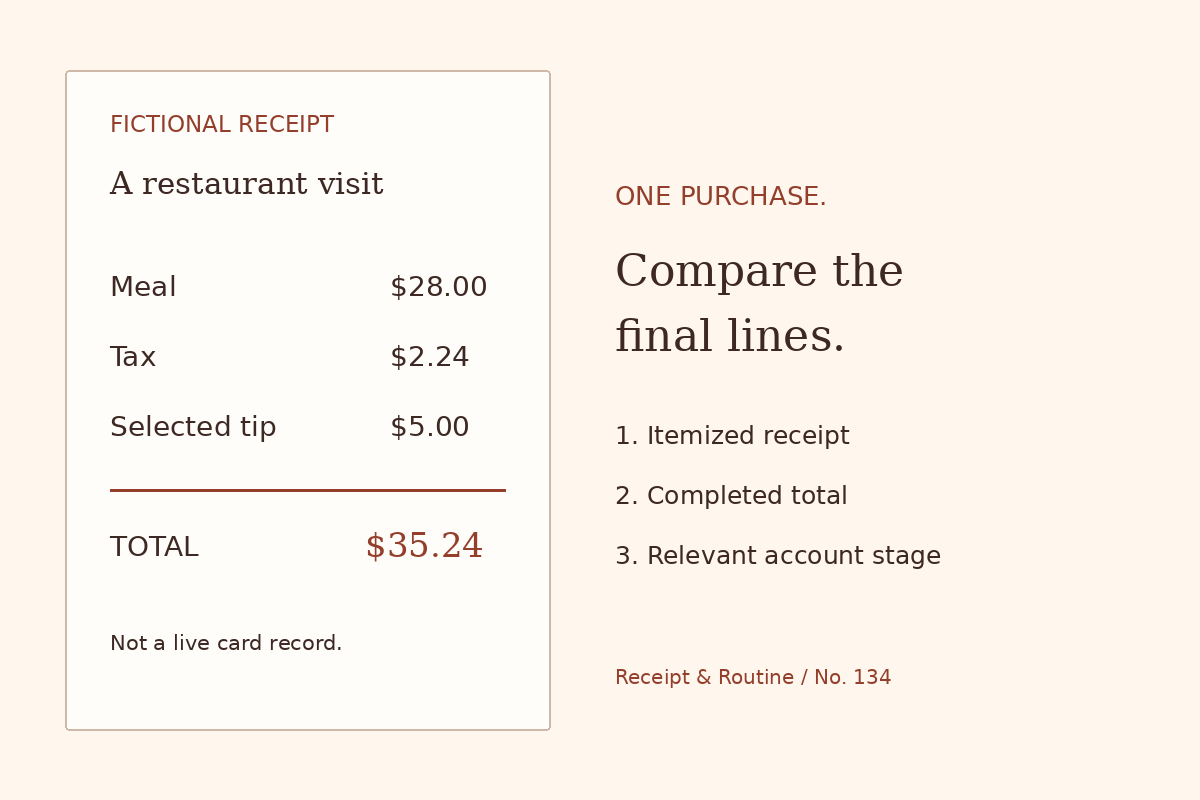
Imagine a fictional restaurant receipt with a meal subtotal of $28.00, tax of $2.24 and a voluntarily selected $5.00 tip. The arithmetic total is $35.24. A first account display of $30.24 and a later posted entry of $35.24 would call for matching the final receipt, including the tip. These numbers illustrate a reading method; they are not a Fintwist processing rule, required tip or promised outcome.
Separate three questions
- Was there a purchase? Match your own order or visit to a merchant record.
- What was the agreed final total? Use the relevant receipt, invoice or order revision.
- What has posted? Check the account’s actual status rather than treating a pending amount as final.
Do not add a pending and posted entry together merely because both are visible. Do not delete one from your reasoning merely because the amounts match. First establish whether they are linked stages of one purchase, separate purchases, or a situation the provider needs to explain. This site cannot determine that relationship from a general description.
Changes are observations, not promises
A hold may change the money available for another purchase while the original transaction remains incomplete. An authorization disappearing from a view is not, by itself, proof of a refund or a permanent cancellation. Likewise, an order cancellation email does not independently establish the state of the card account. Keep the merchant’s action and the account’s action on separate lines.
No universal release period belongs in a general-purpose checklist. Ask the merchant what it has submitted and ask the verified card provider about the account entry when necessary. Preserve the response and its date. If someone gives a timeframe, retain its conditions rather than turning it into an unconditional promise.
Escalate uncertainty without inventing a cause
A neutral question is easier to answer than a theory about a processing failure. You can say that a known merchant purchase has a final receipt and a different account status, then ask which stage the entry represents. Use secure official channels for actual details. An unfamiliar or suspected unauthorized charge warrants prompt provider contact, not a delay while you wait for a prettier timeline.
Continue with receipt matching if the stage is clear but the records still do not line up.
Sources and scope
Public sources checked October 21, 2026. The shopping routines and fictional examples are original editorial analysis, not account instructions or transaction guarantees.